Attendance is a payroll problem, not a discipline problem
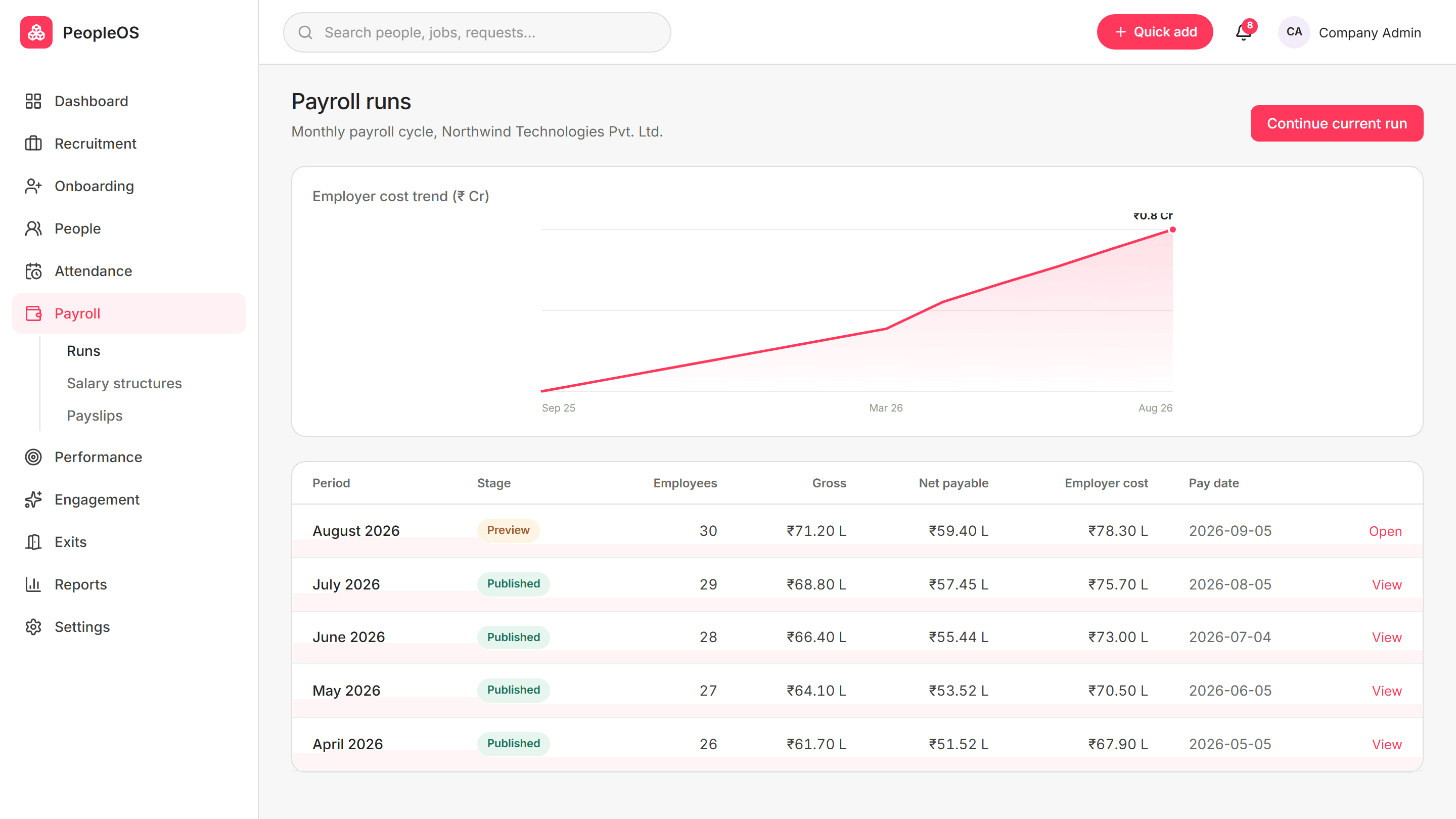
Most attendance policies are written to catch latecomers. The expensive failure is quieter: a period that closes with the wrong numbers in it, and a payroll run that pays them.
Priya Raghavan
Head of Product7 min read
Ask an HR team why they track attendance and you will usually hear something about accountability. Ask the same team what actually goes wrong, and the answer changes: a manager approved a regularisation after the period closed, a half-day was recorded as a full day of leave, someone on loss of pay was paid anyway. None of that is a discipline problem. It is a data problem that surfaces in the bank transfer.
The distinction matters because it changes what you build. A discipline system optimises for catching individuals. A payroll system optimises for closing a period you can defend. Those two goals pull in opposite directions more often than people expect.
The period is the unit of work
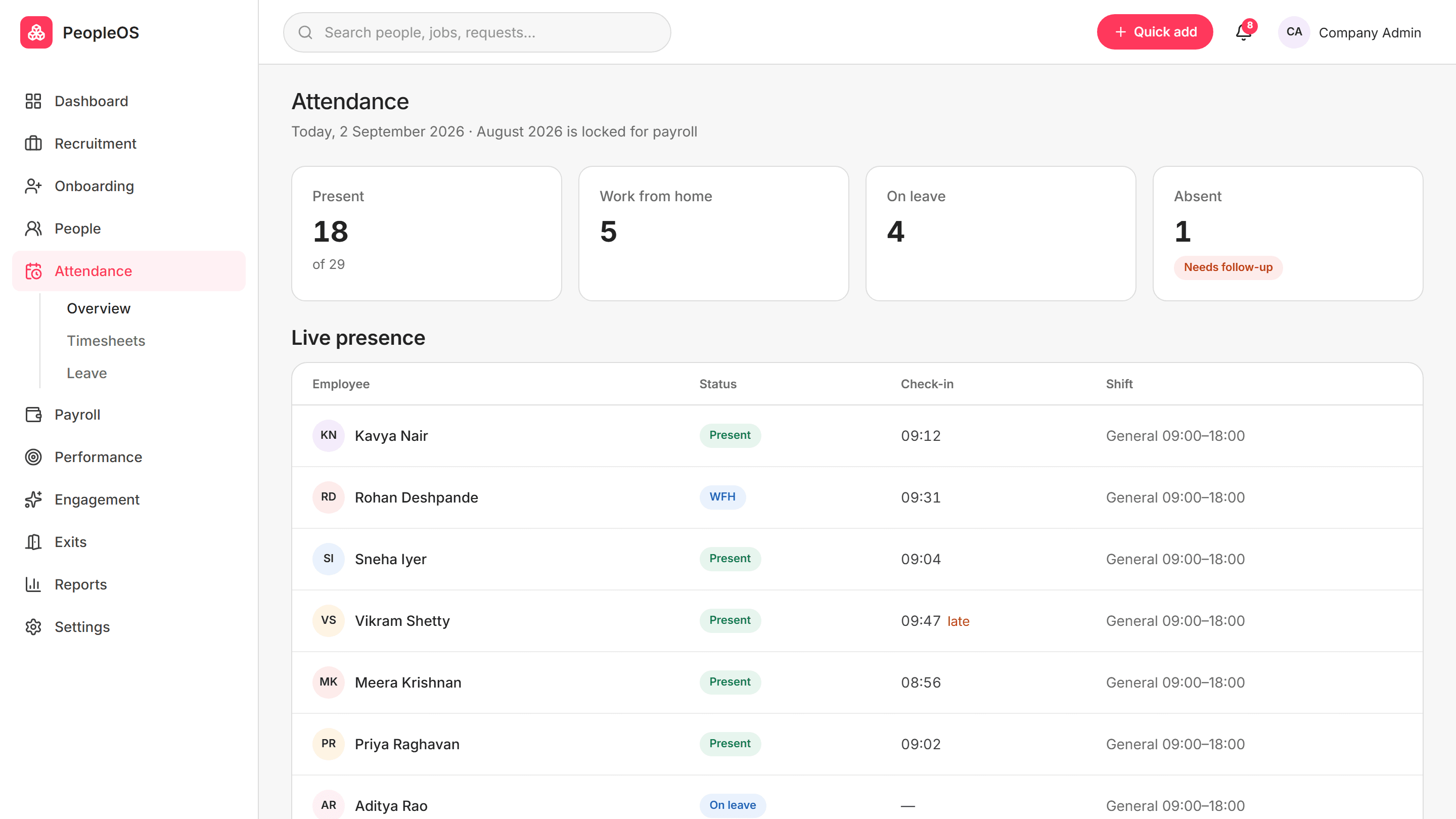
In a payroll-first view, the meaningful object is not the punch. It is the period. A period is either open, in which case anything can still change, or locked, in which case the numbers that feed payroll are fixed and every subsequent correction is an adjustment with a name attached to it.
Teams that skip this step end up with a spreadsheet as the real system of record, because the spreadsheet is the only place where someone froze the numbers long enough to reconcile them.
- An open period accepts punches, regularisations, leave applications and corrections freely.
- Locking a period computes the payable days once and writes them down, so the payroll run reads a fixed input rather than a moving one.
- A correction after the lock becomes an explicit arrear or recovery in the next run, not a silent edit to a closed month.
Exceptions should surface before approval
The most common failure we see is not a wrong punch. It is a right punch that nobody looked at. A missing out-punch, a leave application with no balance behind it, a regularisation sitting unapproved on the last day of the period: each is individually small and collectively the reason a run gets reversed.
The fix is ordering, not effort. Every exception a period contains should be visible and clearable before the approval step, so approval means something. When exceptions surface after approval, approval degrades into a formality and the real review happens in a reconciliation call three weeks later.
We used to find the problems in the payslip queries. Now we find them on the Thursday before the run, when they are still cheap to fix.
What this means for policy
A good attendance policy written this way is shorter than most. It says when the period closes, who may regularise and until when, what happens to a request that misses the window, and who signs off. It says very little about lateness, because lateness is a conversation between a manager and a person, not a computation.
That is the shift worth making. Attendance is not there to police people. It is there to produce a number you are willing to put your name on, once a month, on time.
Want this run on your own numbers?
Bring your headcount, the states you pay in and your cycle. We will walk the whole run on the call.
Book a demo